Fixing Doors That Won't Stay Closed
Garage Door Repair in Big Sandy for broken springs, damaged cables, and stuck or unbalanced doors
Doors that reverse during closing, make scraping sounds through certain sections of travel, or hang unevenly when partially open indicate specific component failures that affect safe operation. DJ's Garage Door Service repairs residential and commercial garage doors in Big Sandy, addressing broken springs, damaged cables, worn rollers, bent tracks, and cracked panels that prevent normal door function. These failures develop gradually as hardware fatigues under repeated cycling, though spring breaks often occur suddenly when metal fatigue reaches critical levels during door operation.
The repair process identifies which components have failed or moved out of specification, then replaces or adjusts those parts to restore balanced lifting force and smooth travel through the entire door path. Broken springs require replacement in matched pairs to maintain even tension, while cable damage necessitates immediate repair since a single cable failure allows the door to drop unexpectedly on one side.
Request a detailed estimate based on the specific repair needed once the door system has been inspected and the failed components identified.
What Repair Actually Accomplishes
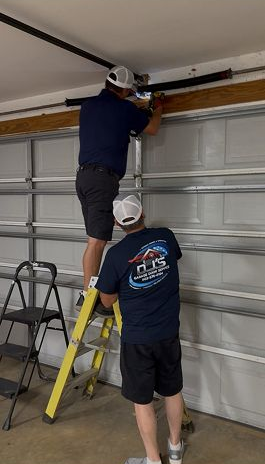
Garage door repair work targets the specific component causing operational failure rather than replacing the entire system, which matters when the door panels and track structure remain sound but hardware has reached the end of its service life. Spring replacement restores balanced lifting force so the door doesn't favor one side during travel, roller replacement eliminates binding that causes hesitation at certain positions, and track realignment prevents the edge-dragging sound that indicates the door is forcing its way past a deformed section.
Once repairs are completed, the door travels smoothly from fully closed to fully open without stopping or reversing mid-cycle, remains stationary when stopped at any position rather than creeping downward, and closes flush against the threshold without gaps on either side. You'll notice the absence of squealing or grinding sounds that accompanied operation before the repair, and the door responds consistently to opener commands without requiring multiple button presses to complete a cycle.
Repair work includes safety verification to confirm the auto-reverse mechanism functions correctly after component replacement and that cable tension matches across both sides of the door. Stuck doors often result from rollers that have seized in their brackets or track sections that have shifted out of parallel alignment, both of which create resistance that prevents normal travel and can burn out opener motors if not addressed.
Answers to Frequent Service Questions
Repair situations raise specific questions about what's involved, how long components typically last, and what factors affect repair decisions.
What causes garage door springs to break suddenly?
Springs fail when repeated flexing cycles cause metal fatigue at stress points, typically after seven to ten thousand open-close cycles depending on spring wire gauge and door weight, with breaks often occurring during operation when spring tension is highest.
How do you determine whether tracks need realignment or replacement?
Tracks with minor bends can be realigned using specialized tools if the deformation hasn't compromised structural integrity, but tracks with cracks, severe dents, or metal fatigue require replacement to prevent future binding and ensure safe door travel.
When should cables be replaced even if they haven't broken?
Cables showing fraying near attachment points, rust damage that has reduced wire diameter, or uneven wear patterns should be replaced before failure occurs, since cable breaks allow uncontrolled door drop that creates safety hazards and can damage panels.
What makes a garage door unbalanced during operation?
Unbalanced doors result from unequal spring tension on either side, worn or seized rollers creating uneven resistance, or track misalignment that forces one side to work harder than the other during travel.
How does humidity in Big Sandy affect garage door components?
High humidity accelerates rust formation on uncoated springs and cables, causes wooden door sections to swell and bind in tracks, and degrades lubricants faster than dry climates, which means components in this region often require more frequent inspection and maintenance.
DJ's Garage Door Service handles repair calls for homes, warehouses, businesses, and facilities throughout Big Sandy. Call (903) 576-6194 when your door shows signs of component failure or operational problems that affect building access.